
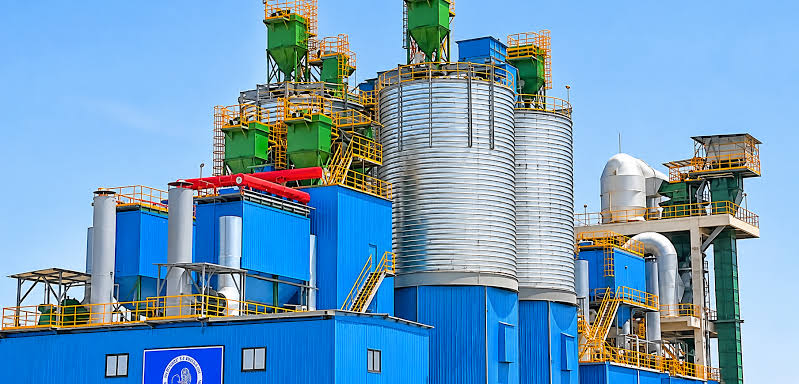
A country that wants to decide its own future must also give itself the means to produce, process and build on its own. This demand for sovereignty is concretely illustrated by the FASO CEMENT project, a future ultra-modern cement plant whose location in Bobo-Dioulasso marks a new stage in Burkina Faso’s industrial ambitions.
Behind this initiative lies an essential question: how can national production become a genuine lever of prosperity for the population?
Under the impetus of Captain Ibrahim Traoré, industrialisation is occupying an increasingly visible place in the country’s economic orientation.
The FASO CEMENT project is part of efforts to strengthen local cement production capacity, support the construction sector and respond to supply difficulties and price pressures.
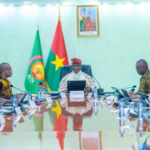
On 5 November 2026, the Council of Ministers gave a decisive administrative boost to the initiative. The government adopted a decree declaring the project to build the industrial unit to be of urgent public utility.
The measure is intended to facilitate the mobilisation of the land needed for its realisation, covering an area of 47 hectares, 30 ares and 28 centiares, between the villages of Kotédougou and Niamadougou in the commune of Bobo-Dioulasso.
This choice reflects an economic orientation that deserves full attention. Cement is a strategic material for infrastructure development. Its cost directly influences real estate projects, private investment and public construction programmes.
Strengthening national production therefore means acting on a sector that affects both major construction sites and the aspirations of families.
The challenge will now be to turn this future cement plant into a genuine economic engine: job creation, development of related activities, market supply and contribution to better accessibility of cement.
The question of price will remain particularly decisive in measuring the concrete benefits of this initiative.
Through FASO CEMENT, Bobo-Dioulasso finds itself at the heart of an ambition that goes beyond a simple industrial infrastructure. Burkina Faso is seeking to consolidate the foundations of its productive autonomy and give greater substance to its economic transformation strategy.
For the strength of an industrial policy is also measured by its capacity to change daily life, offer work, facilitate construction and enable populations to benefit more from the wealth produced on their own territory.