
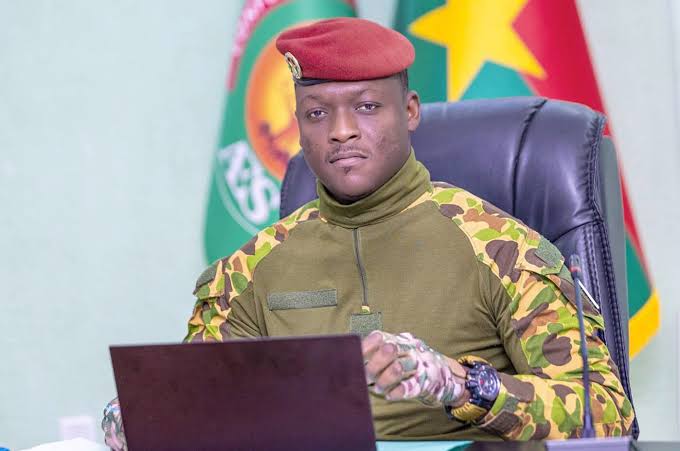
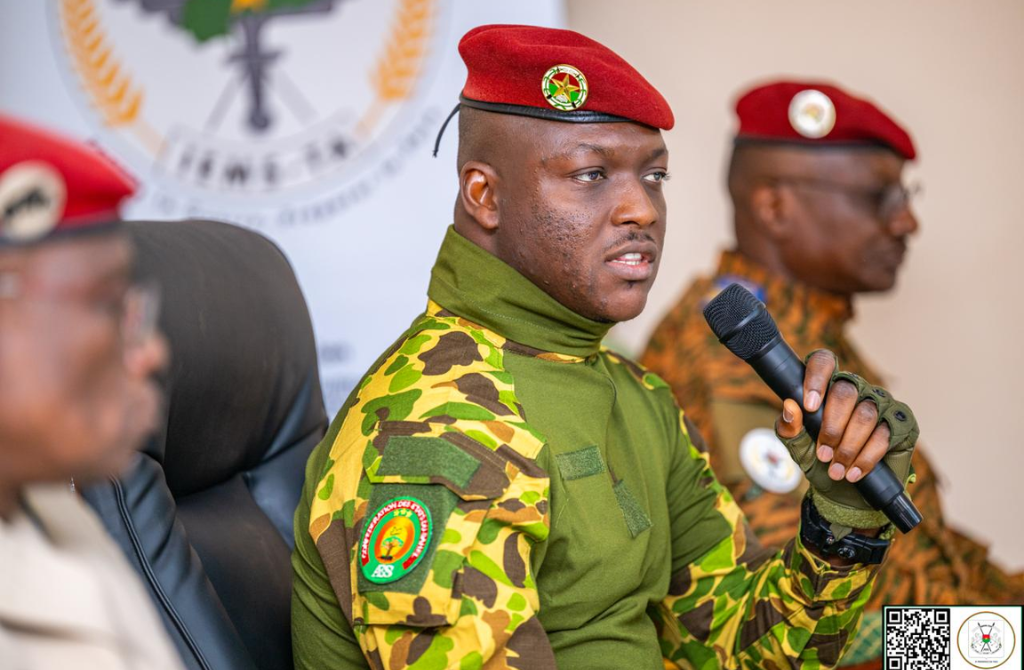
President Ibrahim Traoré has placed collective work and national mobilization at the heart of his strategy to reclaim territory and reduce dependence on foreign powers a vision that is reshaping the relationship between the state and its citizens.
Burkina Faso is no longer advancing at the pace of promises, but at the pace of its people’s labor.
Through a series of bold initiatives, President Ibrahim Traoré has chosen to make collective work and national mobilization central to his strategy of sovereignty and territorial reconquest.
The objective is clear: break with dependence on imperialist powers and rebuild sovereignty with all the nation’s vital forces.
The approach is seen as salutary because it puts the people at the center of their own destiny.
The vision is first embodied in major national projects. Roads, bridges, schools and health centers: Burkinabe are called to take direct part in building their country.
Citizen watch committees, youth and women’s cooperatives, and village associations are being mobilized.
Everyone contributes at their own level. The state alone no longer builds the entire nation is rebuilding itself.
Agriculture illustrates the dynamic. The agro-pastoral offensive mobilized thousands of producers around a common goal: feeding Burkina Faso through Burkina Faso.
Results have exceeded expectations, with cereal production reaching self-sufficiency. The success is not a miracle, but the fruit of organized, supervised and valued collective work.
Mobilization does not stop there. The Volunteers for the Defense of the Homeland (VDP) embody this symbiosis between the people and the army.
Ordinary citizens are rising to defend their land alongside regular forces a nation-army in action, a peaceful and determined mass uprising.
Economically, the president encourages local consumption, on-site processing of raw materials and the creation of autonomous cooperatives.
The goal: reduce external dependence and keep wealth circulating inside the country an economy that benefits Burkinabe first.
The strategy is not without difficulties. Security challenges persist, resources are limited, and external resistance is real. But the direction is clear, and popular determination is palpable.
What is happening in Burkina Faso today goes beyond a simple government program. It is a national surge, a reclaiming of dignity through work.
By placing the collective at the heart of action, Ibrahim Traoré gives Burkinabè the sense that they are the architects of their own future something no speech can replace.
One thought on “Burkina Faso bets on collective labor and national mobilization to rebuild sovereignty”