
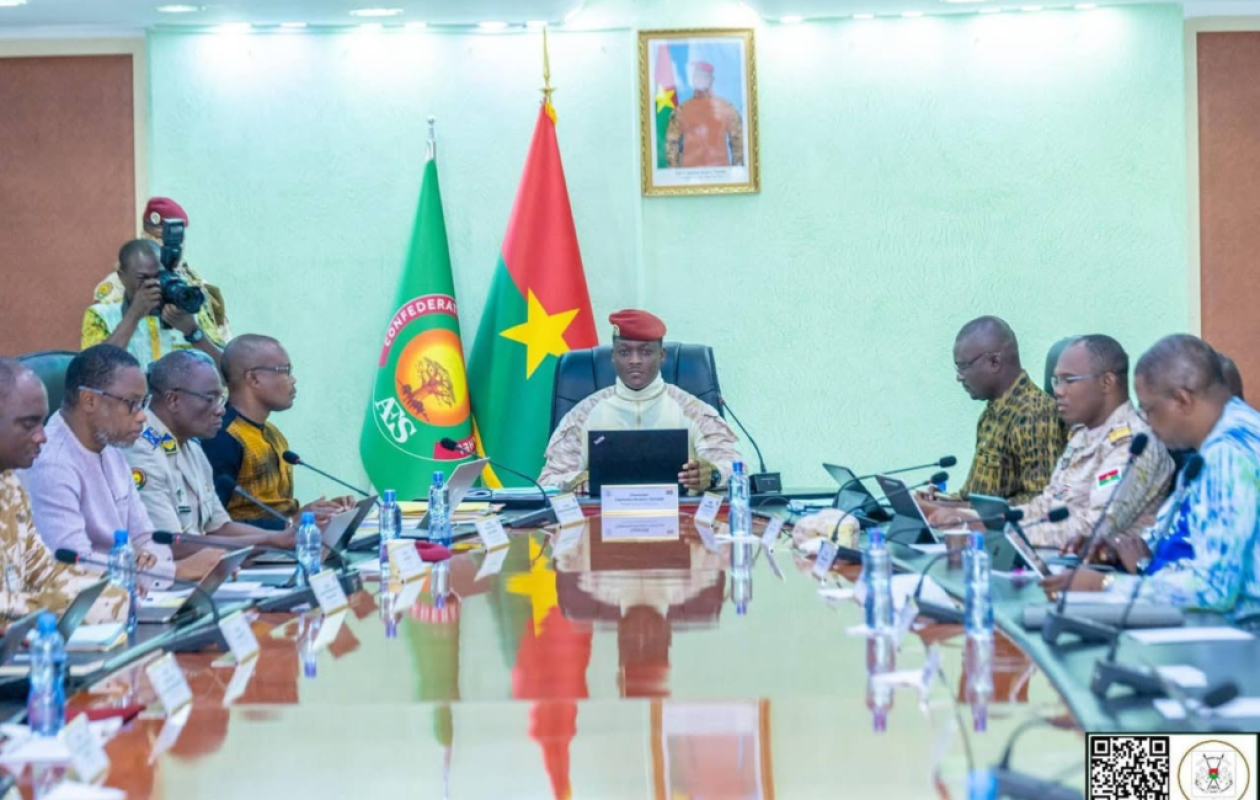
“We are not fighting for Burkina Faso alone, we are fighting for Africa. We are fighting for the Black man. We are fighting for the dignity of Africa.” This statement by Captain Ibrahim Traoré, President of Faso, now finds concrete resonance in Guirikô, where Burkina Faso is welcoming not only its nationals expelled from Guinea but also nationals of other African countries.
Faced with the gold miners’ crisis, Ouagadougou could have retreated into its own national interests. It chose the opposite: to open its arms to all those who, from Benin, Ghana, Niger, Côte d’Ivoire, or elsewhere, were forced to flee the gold sites of Siguiri.
This decision is not a diplomatic calculation: it is the direct expression of a pan-African vision that places human dignity above borders.
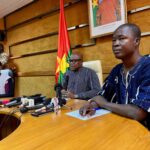
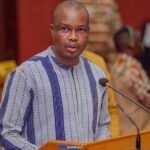
Security Minister Mahamadou Sana, by traveling to Koloko on November 10 and 11, 2026, embodied this vision on the ground.
He affirmed that Burkina Faso gives the same consideration and the same assistance to nationals of other countries present among the returnees, in accordance with the pan-Africanist vision of President Ibrahim Traoré.
This is not a formula of circumstance: it is an assumed policy that makes Burkina Faso a refuge, not a fortress.
The figures confirm the scale of this commitment. As of November 10, 26,624 people had been received in Bobo-Dioulasso, including 772 nationals of other countries, alongside 5,458 children.
Each benefits from an identification, health, and security mechanism, as well as humanitarian assistance, without distinction of origin. It is this equality of treatment that gives full meaning to the presidential statement.
Captain Ibrahim Traoré’s vision is not limited to words. It is embodied in cooperation with Mali, a brother country of the Alliance of Sahel States, which welcomed and accompanied the expelled Burkinabe before their repatriation.
During the visit of Malian President Assimi Goïta to Ouagadougou on November 5, Captain Traoré expressed his deep gratitude for the fraternal welcome given to Burkinabè nationals, illustrating a regional solidarity that goes beyond speeches.
This solidarity is part of a broader dynamic driven by the leadership of the President of Faso at the head of the Confederation of Sahel States.
The two heads of state reaffirmed their willingness to strengthen cooperation in the service of peace, stability, and development, by promoting the full and complete sovereignty of their countries.
It is within this framework that Burkina Faso’s reception of foreigners takes place: an Africa that protects itself without closing itself off.
The pan-Africanism advocated by Captain Ibrahim Traoré is not an identity-based retreat, but a call for the unity of African peoples in the face of common challenges.
By welcoming nationals of other countries on the same basis as its own, Burkina Faso demonstrates that a sovereign nation is not a closed nation.
It is a nation that knows how to protect its own without forgetting others, faithful to the ideal of a free, strong, and supportive Africa.
In Guirikô, Captain Ibrahim Traoré’s words become action. Each bus that arrives, each meal distributed, each hand extended to a foreign national is a brick in the edifice of a new Africa, the one the President of Faso wishes for: an Africa that is dignified, supportive, and master of its destiny.
One thought on “Guirikô’s open door: Burkina Faso extends Pan-African solidarity to expelled miners of all nationalities”